 |
| Najaf: Ali Bin abi Taleb Shrine is the third holiest for the Shi'a (or Shiite) Islam after Mecca and Medina. It is followed by the Mosques in nearby Karbala where Ali's younger son Hussein and family were massacred by the Omayyad in the battle of Karbala in 680 AD |
Iraq has been at the very center of the world news scene for all the wrong reasons. An artificial war in a country with artificially drawn borders by colonial powers. The land of Iraq is as historic as it gets and very few spots on earth can claim so much credit in the development of Human History and Civilization. The fertile lowland is richly watered by the rivers Euphrates and Tigris, and the "land between the rivers" is what was called Mesopotamia. Assyria, Babylon, Nineveh, Ur, Sumer are all household names of the past, but few realize that since the 7th century Iraq has always taken a center stage in all the events shaping the early days of Islam as a religion and as an empire. This is why Baghdad, Karbala, Najaf, Kufa and Samarra are hugely important. Islam was shaped in the Arabian Peninsula but it was in Iraq that major events took place and shaped the Muslim world in the 7th century and on.
Little has changed since since these early days and Iraq is still the dangerous fault line that has shaped Arab and Islam cultures for two main distinctive reasons:
Iraq is the easternmost "frontier" of the Arabic world , east of which Iran, Afghanistan, Pakistan etc. are mostly Muslim but not Arab, while the north is mostly Turkic and historically Armenian. Iraq also represents the tricky "fault line" and bloody rivalry between the Sunni and the Shi'a branches of Islam. Sunnis or "mainstream" Muslims may well represent around 80% of Islam, but in Iraq the Arab Shi'a form a clear majority and interestingly share that belief with their neighboring Iranians. Since colonial times and until the Saddam era the minority Sunnis were in firm control of the country, but George W. Bush put the Shi'a in the driving seat in Baghdad. This Shi'a led government does not bode well with most of the Sunni governments from Saudi Arabia to Egypt and beyond (see the map below).
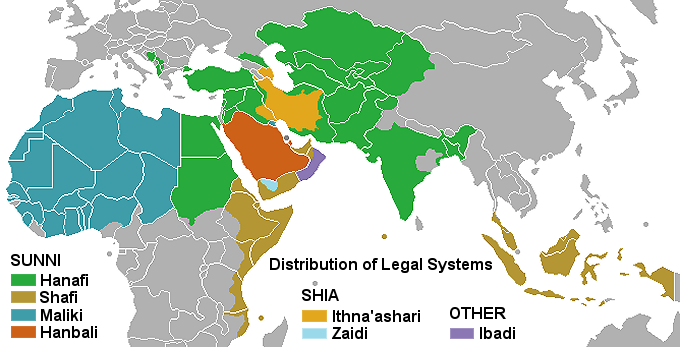
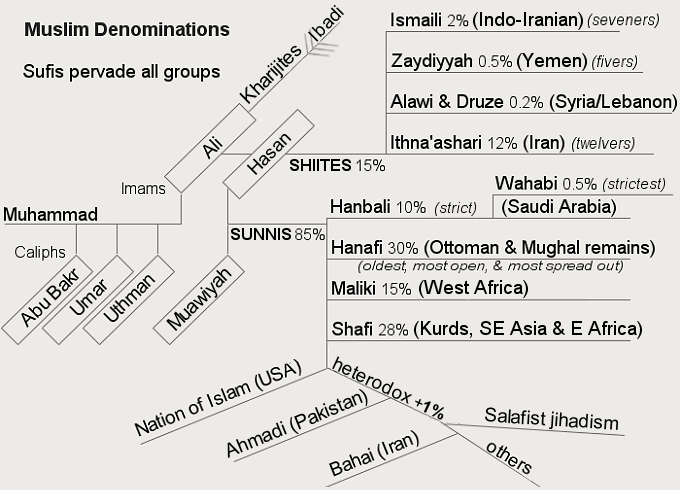
But how come Iraq is so different from most of its Arab neighbors and has a Shi'a Arab majority? And how come all the major Shi'a shrines are all in Iraq? The answers are of course embedded in history. We shall try to explain the circumstances and present the major shrines within the Iraq and their significance.
Upon the Death of Prophet Muhammad (632 AD), the Muslim leadership was confronted with major headaches, plots and imbroglio regarding the succession to the Caliph role. By all accounts, Mohamed was an absolute genius: Not only he founded a new and major monotheistic religion but he also created a very successful military and political entity that grew from nothing to a majestic empire within a few decades. Muhammad was a unique personality and choosing a successor naturally proved to be very difficult, divisive and a bloody affair that unfortunately continues to this day. Any Caliph succeeding Mohamed had to be the real leader of the mushrooming Empire and religion, having all the powers held by Mohamed himself except the Prophecy. But choosing the successors proved catastrophic for the unity of the ranks.

Still hurting after all these years: Tears for the Shi'a Imam Hussein martyrdom in Karbala (680 AD). The bandanna reads "Allah and Hussein", while green is seen as the color of Islam. These kind of "populist" posters seem to be less widespread in Sunni societies.
The first four Rashidun (righteously guided) Caliphs that succeeded Muhammad were:
-Abu Bakr As Siddiq: (632-634 A.D: Mohamed's father in law, expanded the Muslim empire to Syria and Iraq and confronted the Byzantines and the Persian Sassanids. He consolidated the Koran. He died of illness. Shi'a do not hold him in high esteem because he was chosen over Ali despite all his incredible credentials and qualities.
-Umar ibn al Khattab (634-644 A.D.): Expanded the Muslim Empire by ruling over Sassanid Persia and to modern Libya. He was a great political and military leader but almost hated by the Shia for his fierce opposition to Ali. Umar was decisive and even could afford to dismiss the Arab military genius Khalid bin Waleed who had spearheaded most of the military expansion of the new empire without ever being defeated. Umar was assassinated by the a Persian while praying in Medina.
-Uthman ibn Affan (644-656 A.D.)Married to Muhammad's daughter Ruqayya, he was a member of the Omayyad clan and reputedly the Fourth person to convert to Islam. Under his reign the Muslim empire reached all the way to Morocco and Afghanistan. He was assassinated in Medina and buried in the famous Jannat al Baqi cemetery destroyed by the Saudis (see details below)
-Ali ibn abi Taleb (656-661 A.D.). Fourth caliph for the Sunni but first imam for the Shi'a. He too was an exceptional man, married to Muhammad's daughter Fatima al-Zahra from his first wife Khadija and his father was an uncle to the Prophet. Ali is considered as the first person to have converted to the new religion revealed my his uncle and he was also reputedly the only person being born in the Holy Ka'aba in Mecca (which was a pagan shrine at the time). Ali was a great narrator and military leader. Ali’s appointment as Caliph accelerated the internal struggles and caused a civil war and a major schism in Islam. Ali was challenged on multiple fronts and fought several battles against his rivals within the Muslim hierarchy. He was finally assassinated by his enemies in 658 in Kufa and his murder brought to end what was known as the era of the “righteously guided caliphs”. Ali’s supporters accepted his son Hassan (and later his other son Hussein) as caliph, however the majority rallied behind Ali’s opponent Abi Sufyan, a kinsman of Uthman who founded the Omayyad dynasty in Damascus.
It is to note that the first four Caliphs were very close friends and relatives of the Prophet and they were chosen by a collegial decisions or consensus based on "merit" and value. However this system was rejected by the followers of Ali bin abi Taleb who felt that Ali must have been the automatic and obvious choice to succeed his Father-in-Law and Cousin Muhammad. Ali did not openly fight the nomination of the preceding three Caliphs and waited for his turn, but he was obviously irritated and rejected the notion of "consensus". For Ali and his followers the Prophet's family ties were overwhelming and therefore other means or criteria to choose successors were simply invalid. Shi'a firmly believe that Ali and all his descendants (known collectively as the Ahlul Bayt, or the Household) must have had absolute priority to rule as Caliphs. But it was not to be.
Shi'a Islam has several branches, the largest of which is the "Twelvers", and they share a lot with the Sunnis but disagree as far as legal opinions, texts and Words attributed to the Prophet etc. Other groups of Shi'a exist as well such as the "Ismai'li" and the "Zaidi", who in their turn disagree with the Twelvers over lines of successors and the lineage of Imams following Ali.
-Abu Bakr As Siddiq: (632-634 A.D: Mohamed's father in law, expanded the Muslim empire to Syria and Iraq and confronted the Byzantines and the Persian Sassanids. He consolidated the Koran. He died of illness. Shi'a do not hold him in high esteem because he was chosen over Ali despite all his incredible credentials and qualities.
-Umar ibn al Khattab (634-644 A.D.): Expanded the Muslim Empire by ruling over Sassanid Persia and to modern Libya. He was a great political and military leader but almost hated by the Shia for his fierce opposition to Ali. Umar was decisive and even could afford to dismiss the Arab military genius Khalid bin Waleed who had spearheaded most of the military expansion of the new empire without ever being defeated. Umar was assassinated by the a Persian while praying in Medina.
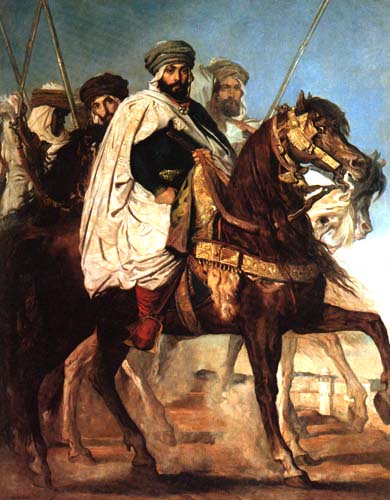 |
| Uthman Ibn Affan, Third Caliph, a hate figure for the Shi'a because of his supposed fierce opposition to Ali and his Omayyad lineage. |
-Uthman ibn Affan (644-656 A.D.)Married to Muhammad's daughter Ruqayya, he was a member of the Omayyad clan and reputedly the Fourth person to convert to Islam. Under his reign the Muslim empire reached all the way to Morocco and Afghanistan. He was assassinated in Medina and buried in the famous Jannat al Baqi cemetery destroyed by the Saudis (see details below)
-Ali ibn abi Taleb (656-661 A.D.). Fourth caliph for the Sunni but first imam for the Shi'a. He too was an exceptional man, married to Muhammad's daughter Fatima al-Zahra from his first wife Khadija and his father was an uncle to the Prophet. Ali is considered as the first person to have converted to the new religion revealed my his uncle and he was also reputedly the only person being born in the Holy Ka'aba in Mecca (which was a pagan shrine at the time). Ali was a great narrator and military leader. Ali’s appointment as Caliph accelerated the internal struggles and caused a civil war and a major schism in Islam. Ali was challenged on multiple fronts and fought several battles against his rivals within the Muslim hierarchy. He was finally assassinated by his enemies in 658 in Kufa and his murder brought to end what was known as the era of the “righteously guided caliphs”. Ali’s supporters accepted his son Hassan (and later his other son Hussein) as caliph, however the majority rallied behind Ali’s opponent Abi Sufyan, a kinsman of Uthman who founded the Omayyad dynasty in Damascus.
 |
| Ali's legendary double edged sword called the Zulficar Ali. (Note that Pakistan's ex-prime minister and Benazir's father was named Zulficar Ali.) This is a replica sword sold as an expensive gift for those who can afford the extra protection it provides! |
It is to note that the first four Caliphs were very close friends and relatives of the Prophet and they were chosen by a collegial decisions or consensus based on "merit" and value. However this system was rejected by the followers of Ali bin abi Taleb who felt that Ali must have been the automatic and obvious choice to succeed his Father-in-Law and Cousin Muhammad. Ali did not openly fight the nomination of the preceding three Caliphs and waited for his turn, but he was obviously irritated and rejected the notion of "consensus". For Ali and his followers the Prophet's family ties were overwhelming and therefore other means or criteria to choose successors were simply invalid. Shi'a firmly believe that Ali and all his descendants (known collectively as the Ahlul Bayt, or the Household) must have had absolute priority to rule as Caliphs. But it was not to be.
Shi'a Islam has several branches, the largest of which is the "Twelvers", and they share a lot with the Sunnis but disagree as far as legal opinions, texts and Words attributed to the Prophet etc. Other groups of Shi'a exist as well such as the "Ismai'li" and the "Zaidi", who in their turn disagree with the Twelvers over lines of successors and the lineage of Imams following Ali.
| The Twelve Imams of the Shi'a, With Ali, Hassan Hussein and the 9 others. The last disappeared Imam's face is covered at the far left. Other Shi'a sects like the Ismailis or Zaidis believe in different lines of successors to those of the "Twelvers". |
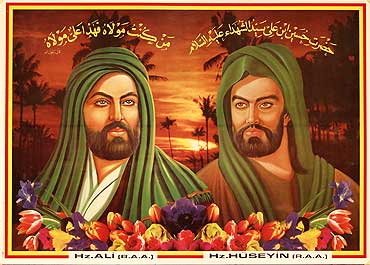 |
| Shi'a Imams: Likenesses of Ali bin abi Taleb and his son Hussein. |
The death of Ali did ot put an end to the ugly infighting. Ali's son Hussein had participated in his father's effort to succeed Muhammad and when his father died his older brother Hassan and another claimant, Muawiyah, fought for Ali's position. Muawiyah reinforced his position as a leader when Hassan abdicated and agreed to go on a forced retirement to Medina, and Hussein did not object. However, when Muawiyah sought to name his son Yazid as his successor, which would create the Omayyad dynasty, Hussein became the leader of an anti-Yazid movement and left Mecca for Kufa. While stopped at Karbala, 4,000 men from Yazid's army arrived, cut off Hussein's access to water and food, and ordered him to acknowledge Yazid's authority. Hussein and 72 followers refused and were massacred. Hussein's head was taken to Damascus to be displayed before Yazid (680 AD).
Only Hussein’s ill son Ali ibn Hussein (a.k.a. Zayn al-‘Abidīn) survived of the Imam’s male relatives and companions. His sister, Sayyida Zaynab, and his daughters were among the survivors of his band. They were all taken back in chains to
 |
| Sufi orders like these whirling dervishes can be both Sunni or Shi'a in essence, but most of them trace their origin to Ali bin abi Taleb as their original spiritual guide on top of their original teacher like Jajal-ul-din Rumi of the Mawlawiya sufi mystics order (Photo imageshack/skyscrapercity.com) |
After consolidating their power, the Omayyad completely transferred the power center of the Muslim Empire from Mecca to Damascus and continued what is now known as the Sunni Islam lineage. The followers of Ali and his sons Hassan and Hussein and the subsequent Mahdi (Shi'a) were left in the minority and militarily beaten, but continued to believe in the justness of their their struggle. Therefore the Ali lineage continued through his sons Hassan and Hussein and 9 other Imams until the "disappearance" of the twelfth Imam called Al-Mahdi from the Iraqi city of Samarra. The disappeared Imam is expected to come back. It is obvious that the Iraqi territory was the theater of the major schism that occurred between the early Muslim factions and therefore it is easy to understand why all the major Shi'a shrines are situated in Iraq or in Syria where the family members of the Karbala massacre were taken after Hussein's death.
 |
| Most of the population are Muslim Arabs, divided into the Sunni Muslim of central Iraq and Shi'a Muslim of the south. The Kurds inhabit the north along with some Turkomans and Yazidis, mostly in rural areas as well as around 2 million Christians live in Iraq, mostly Chaldean and Assyrian. Arabic is the official language in most of the country, Kurdish is official in northern sections. (Salaam.co.uk) |
Najaf and Kufa:
Najaf is understandably the most important Shi'a city as the site of the tomb of Ali Bin abi Taleb (first Imam of the Shi'a and fourth of the Caliphs). Therefore Najaf has an unparalleled importance to the hundreds of millions of Muslims and Shia in particular.
After the assassination of the third Caliph Uthman, Ali ibn abi Taleb was finally chosen as the fourth Caliph until he was assassinated as a result of all the internal struggles and intrigues in Kufa. Ali was finally was buried in nearby Najaf where his Mosque and shrine stand today.
Najaf is where his political power center was and he we was assassinated in the twin city Kufa.
Najaf receives millions of pilgrims from around the world and many elderly people go there and await death and to be buried in the As-Salaam cemetery as an ultimate dedication to Ali. Both Najaf and Karbala are believed to be Gates to Heaven. Najaf cemetery is thought to be the largest in the world with more than an estimated 5 million burials.
As the most important Shi'a shrine, Najaf has always been the site of attacks by Sunnis throughout the ages and also was the center of a large armed uprising against the U.S. led coalition forces. Since the fall of Saddam, Najaf has reclaimed its position as the most important theological learning center in Shi'a Islam. The father of the Iranian Islamic revolution Ayatollah Khomeini spent 14 years in exile in Najaf before his triumphant return to Iran after deposing the Shah Mohamed Reza Pahlavi Shah in 1979.
After the assassination of the third Caliph Uthman, Ali ibn abi Taleb was finally chosen as the fourth Caliph until he was assassinated as a result of all the internal struggles and intrigues in Kufa. Ali was finally was buried in nearby Najaf where his Mosque and shrine stand today.
Najaf is where his political power center was and he we was assassinated in the twin city Kufa.
Najaf receives millions of pilgrims from around the world and many elderly people go there and await death and to be buried in the As-Salaam cemetery as an ultimate dedication to Ali. Both Najaf and Karbala are believed to be Gates to Heaven. Najaf cemetery is thought to be the largest in the world with more than an estimated 5 million burials.
As the most important Shi'a shrine, Najaf has always been the site of attacks by Sunnis throughout the ages and also was the center of a large armed uprising against the U.S. led coalition forces. Since the fall of Saddam, Najaf has reclaimed its position as the most important theological learning center in Shi'a Islam. The father of the Iranian Islamic revolution Ayatollah Khomeini spent 14 years in exile in Najaf before his triumphant return to Iran after deposing the Shah Mohamed Reza Pahlavi Shah in 1979.
 |
| Najaf: Ali bin abi Taleb shrine inside the Mosque, the third holiest for the Shi'a after Mecca and Medina. |
 |
| Najaf: Imam Ali Bin abi Taleb Mosque. He was assassinated in the nearby city of Kufa by rivals. He is considered the first Imam by the Shi'a and the fourth Caliph by the Sunnis. |
 |
Najaf: Wadi al-Salaam Cemetery, the world's largest with more than 5 million burials: Iraqi Shi'a pilgrims march through this cemetery in Najaf, Iraq, on their way to Karbala with Imam Hussein flags. Shi'a make their annual pilgrimage to Karbala to mark the end of 40 days of mourning following the anniversary of the seventh century death of Imam Hussein, a grandson of the Prophet Mohamed and son of Ali. (AP Photo/Alaa al-Marjani) |
Karbala:
The battle of Karbala occurred on October 10, 680 AD when the Omayyad Yazid ibn Muawiya massacred Ali’s son Hussein and 72 of his family and companions. The city has since been central to The Shi'a sect. The modern city of Karbala includes the Mosques dedicated to Imam Hussein (the Third Imam of the Shi'a) as well as the mosque in honor of his brother Abbas ibn Ali. The two mosques are very close and linked with a large public space. Karbala is therefore the fourth holiest site for the Shi'a after mecca, Medina and Najaf, where millions of pilgrims converge to the city for the commemoration of the battle during the Ashura (see photos below). Many hope to die and get buried right there and not return home!
 |
| Karbala, Imam Hussein Shrine: Free for the first time in decades to worship openly, these exhausted Shi'a Muslim pilgrims crawl into the shrine. The Shi'a were powerless under Saddam and predominately poor, but now find themselves major players on the world stage often at odds with the U.S.A. They are a diverse people who's beliefs range from the radical to the progressive. (photo/caption Mattmoyer.com) |
Karbala of course has been an alien "concept" and philosophy to some Sunnis, and these shrines have been so many times destroyed and rebuilt. In 1802 the Sunni Wahhabi (forefathers of modern Saudi Arabia) attacked the city and demolished everything they could, trying to wipe out the Shi'a sacred shrines. Radical Sunnis consider Shi'a not much more than shameless heretics and enemies of "true Islam" as they understand it. After the fall of Saddam Hussein, Karbala did find a revival of Shi'a religious traditions and expressions, but the Sunni al-Qaeda linked zealot groups carried deadly bomb attacks against the pilgrims in 2004 and 2007, killing dozens of innocents. Karbala has also been the scene of armed uprisings against the US led forces occupying Iraq.
 |
| Karbala: Imam Hussein Shrine: millions of Shi'a across the region mark the climax of the 10-day Ashura rites mourning Imam Hussein's slaying in 680 A.D., entrenching the deep schism between the Shi'a followers and the majority Sunnis. These Shia rites have often been the target of attacks by Sunni militants consider the Shi'a some kind of heretics. Ashura was severely curtailed under (Sunni) Saddam Hussein, but has seen a revival since the country was occupied by a U.S.-led invasion in 2003. Millions converge to the Shi'a holy city of Karbala. The other adjacent mosque is the Abbas ibn Ali Mosque, brother of Hussein. |
 |
| Tehran: Karbalai'ya mosque during the Ashura rites. In a sign of mourning during Ashura, many Shi'a beat their chests to the sound of drums and religious chants, or flagellate themselves, often drawing blood in remembrance to Hussein's and his family's bloody end. |
 |
| South Lebanon: Ashura in the city of Nabatiyeh under the watchful eyes of the regular Lebanese Army units. Most of these young men are followers of either Hezbollah or the other major Shi'a movement called Amal (Hope). |
 |
| Zealots at work:A wounded Shi'a boy in Baghdad relies on Imam Hussein for speedy recovery after an attack on the pilgrims heading to Karbala (Photo: MSNBC). Attacks by Sunnis against Shi'a worshipers and the shrines have become kind of "normal" |
Samarra:
After Najaf and Karbala, the Iraqi city of Samarra has a very important Shi'a mosque built in 944. This mosque has the remains of the 10th and 11th Imams, namely Ali al Hadi and his son Hassan Al Askari,. hence the name of the mosque Al Askari. Samarra today is in a Sunni dominated area in Iraq and this mosque has been the target of very heavy attacks and bombings in 2006 and 2007 by Sunni extremist groups, almost totally destroying the golden dome and the minarets as well as the clock tower. Intolerance of extreme proportions. The last Imam is said to have "disappeared" from a nearby location and expected back.

 |
| Samarra: The Askari shrine before and after the deadly attacks by Sunni zealots to wipe out any "unacceptable" Shi'a influence or presence in the region. |
 |
| Samarra: The unique architectural jewel Abbasid era mosque and the spiral snail shell like minaret (about 850 AD). It is said to be too high to be used as a true minaret! |
Medina:
 |
| Medina: The Prophet's tomb and mosque (Masjid al-Nabawi) taken from Jannat al-Baqi cemetery. The total destruction of this cemetery to the rubble was done in 1920's by the Wahhabi who took control of the Holy City and founded Saudi Arabia. It was done in the name of extreme Monotheism banning all worship of human shrines. Many of Prophet Mohamed's closest relatives and companions were buried there. The deliberate destruction of the cemetery is particularly offensive to Shi'a who consider it to be an act of "barbarism" by the Saudis. Shi'a pilgrims occasionally stage improvised protests at the site despite heavy Saudi police crackdown (Photo: Flickr Chinx786). |

| Jannat al-Baqi cemetery before being demolished by King Al-Saud in 1925. The graves of 2nd, 4th, 5th and 6th Shi'a Imams and scores of Mohamed's family and companions are buried here. These structures are totally demolished to a huge sand field as in the picture above. |
The Jannat al-Baqi cemetery next to the Prophet Mohamed Mosque in Medina is of extreme importance to Shi'a. It was totally razed by the Wahhabi Saudis in the 1920. It contains the tombs of no less than 5 of the Twelver Shiite imams, including Ali’s eldest son Imam Hassan, Ali ibn Hussein (Imam Hussein’s son) and Fatima bint Assad (the mother of Ali). The destruction of the cemetery was done in the name of total ban for any kind of worship of humans as opposed to the strict worship of Allah. It is said the the Wahhabi were very close in destroying even Mohamed’s tomb by the same logic of forbidding idolatry of humans. The cemetery of Jannatul Mu’alla in Mecca is also held in very high esteem but is less "prestigious" than al-Baqi.
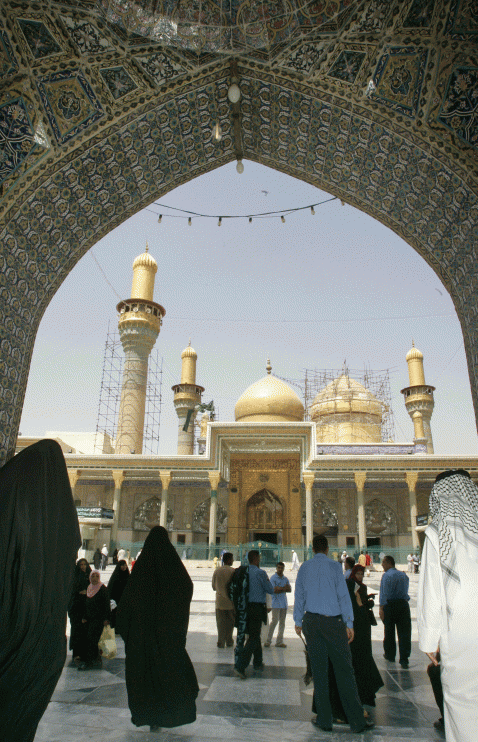
Baghdad: Kadhimiya mosque
 |
| Baghdad:The Kadhimiya mosque, with streets overflowing with pilgrims and traditional celebrations of a Shi'a commemoration. This mosque is the most important Shi'a shrine in Baghdad and is believed to have the remains of Imam Mussa al Kadhim, the seventh Imam of the Twelver Shi'a. |
After Mecca, Medina and the Al Aqsa mosque in Jerusalem, the Shi'a hold Najaf /Kufa and Karbala as their holiest places along with Samarra and the Kadhimiya in Baghdad.
Here are other very important shrines to Shi'a Islam, some also very important to all Muslims regardless of sect or denomination:
Damascus: Sayyidat Zaynab Mosque
 |
Damascus: Sayyidat Zaynab Mosque Damascus has wonderful Iranian Kashani decorations. The dome, and the hanging chandeliers, stand on top of the shrine where her body is believed to rest. The decoration, ceramics and ceilings using mirrors are influenced by Iranian Safavid architecture.(Photo: Yasser el Bahadli). |
Damascus: Sayyidah Ruqayya Mosque
 |
Damascus: "Ruqayya" mosque, dedicated to Imam Hussein's daughter Sayiddah Ruqayya (photo: soggysyrial.com). |
Mashhad (Iran): Imam Reza Shrine
 |
| Mashhad, Iran: The shrine was built on the site where Imam Reza died in 818 AD. He was the 8-th Shi'a Imam born in Medina in 765 AD. At the age of 51 he was surprisingly "appointed" by the Abbasid Caliph Mamun (a Sunni) to become his successor as the next caliph and gave him his daughter in marriage. Mamun's actions disturbed the rival Sunnis and several violent uprisings ensued. Reza's sudden death aroused suspicions among Shi'a who believed Mamun had poisoned him to avoid unrest. Millions visit Mashhad every year. |
Mazar e-Sharif (Afghanistan): Imam Ali shrine
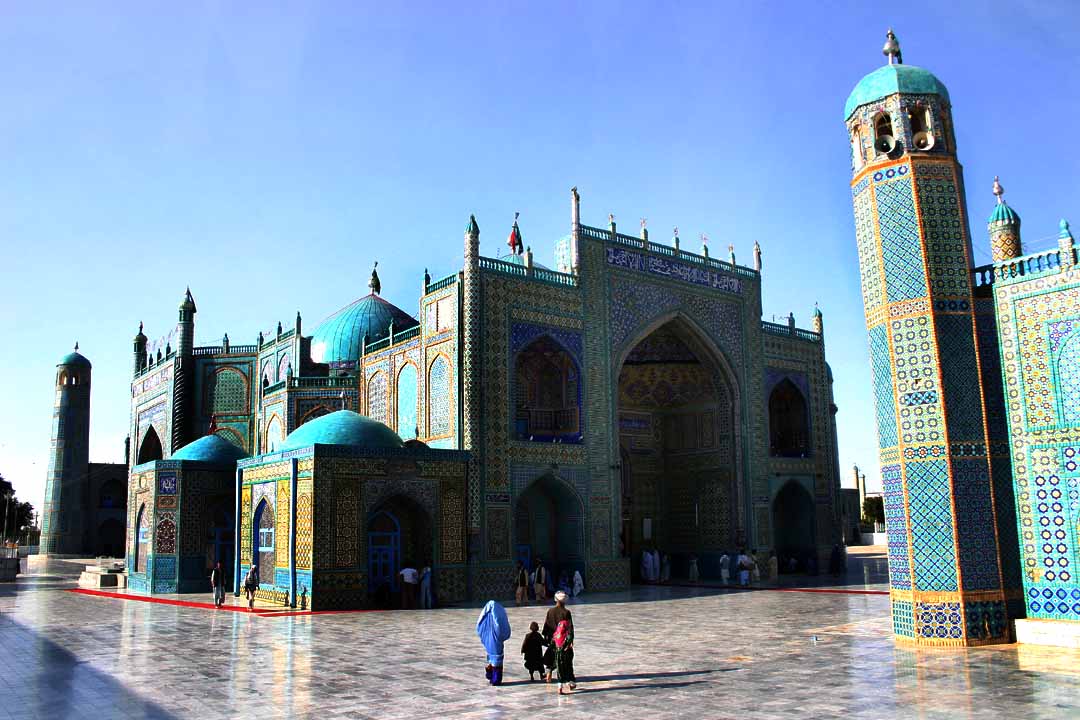 |
Afghanistan: In an a bizarre but interesting twist, some Muslims believe that the site of the tomb of Imam Ali ibn abi Taleb is not in Najaf but in... the Afghan city of of Mazar-e Sharif. This was supposedly "revealed" by the sixth Twelver Shi'a Imam Jaafar al-Sadiq, but is not shared by the majority Twelver Shi'a. Nonetheless, millions go there on Pilgrimage. It is also speculated under this fabulous Blue Mosque lies |
Krikor Tersakian, April 2010


